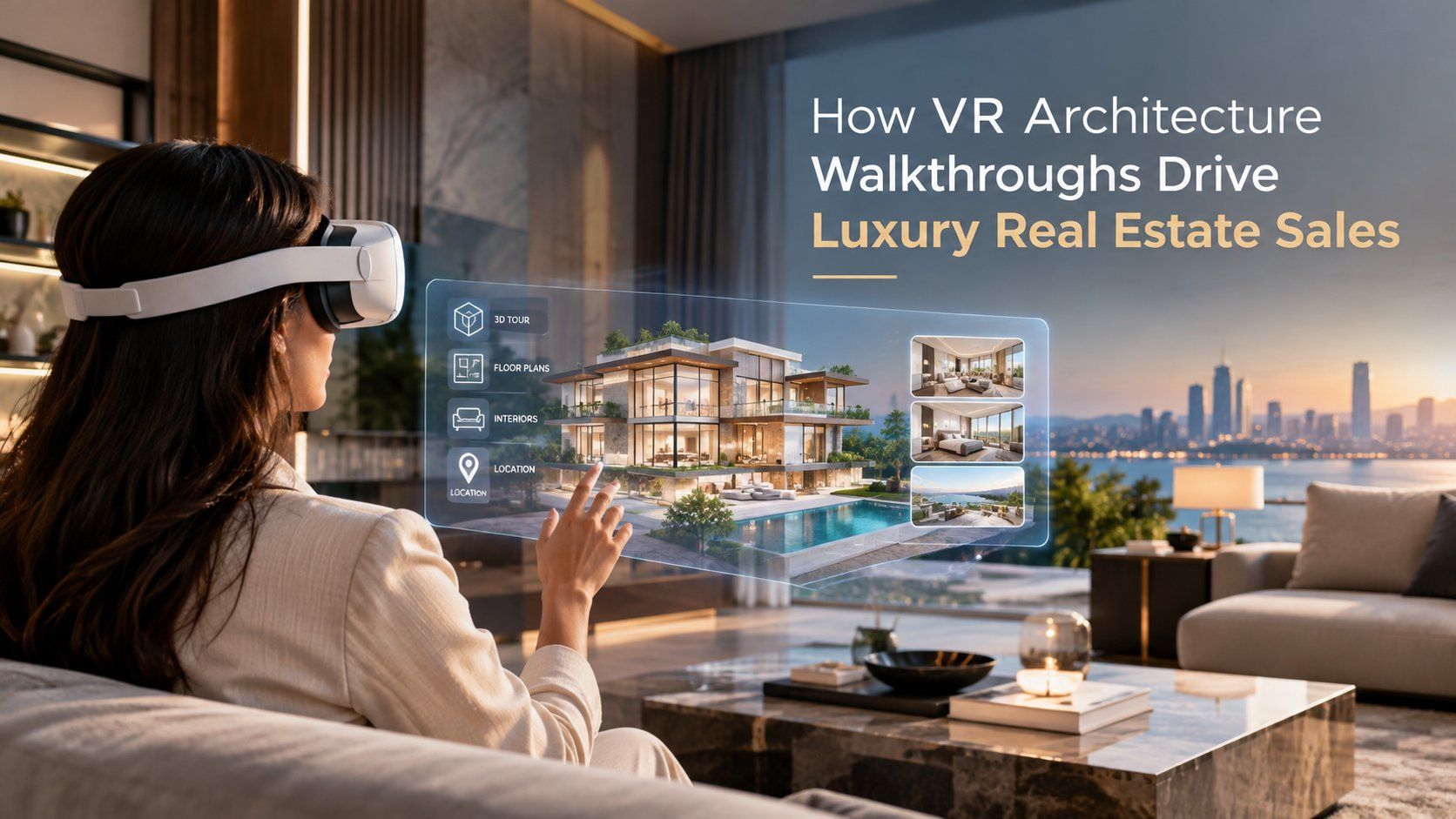
High-stakes luxury real estate sales are undergoing a seismic shift: implementing a browser-native VR architecture walkthrough can increase pre-construction off-plan sales velocity by up to 43%, according to industry estimates. Historically, real estate developers and masterplan consultants faced a steep technological barrier when presenting unbuilt architecture. Immersive spatial tours required downloading gigabytes of proprietary executable software, tethering users to high-end workstation PCs, or shipping prospective buyers bulky headsets in specialized flight cases. For ultra-high-net-worth investors evaluating off-plan luxury residences in London, Dubai, or Miami, these friction points frequently stalled sales momentum before spatial storytelling could even begin.
Enter the defining technological shift in PropTech and spatial visualization: the convergence of WebGPU, server-side pixel streaming, and browser-native spatial computing. By granting standard web browsers direct, low-level access to graphics processing units without external plugins, architects and visualization studios can now deliver photorealistic, multi-user real-time spatial environments straight to an iPad, laptop, or Apple Vision Pro via a single URL. The era of passive, static luxury real estate marketing has officially drawn to a close; interactive real-time engagement is now the global benchmark.
The Zero-Friction Revolution: Streaming a VR Architecture Walkthrough via WebGPU
For nearly a decade, browser-based 3D graphics relied almost exclusively on WebGL—a standard designed for basic vector geometry and simplified lighting calculations that struggled under the immense polygon counts and high-resolution textures of modern architectural CAD models. Rendering complex light transport, volumetric atmospheric effects, high-density vegetation, and multi-layered PBR (Physically Based Rendering) materials within a standard web browser invariably required significant compromises in visual fidelity or suffered from severe frame rate drops.
WebGPU fundamentally rewrites this paradigm. Engineered as a modern W3C standard to mirror hardware-accelerated graphics APIs such as Vulkan, Metal, and DirectX 12, WebGPU allows browsers to execute complex compute shaders directly on host graphics hardware. When paired with real-time render engines running virtualized geometry systems and dynamic global illumination, modern VR architecture walkthrough streaming achieves photorealistic fidelity at high frame rates without requiring the end user to install software or own expensive hardware.
As featured in prominent architectural publications like ArchDaily, the architectural pipeline is no longer strictly bifurcated between offline cinematic animations and simplified interactive models. Today, luxury developers can distribute a WebGPU-enabled link through a private communication channel. A client located in Singapore can open the link and instantly join a multi-user virtual sales suite alongside an advisor in London, exploring an unbuilt penthouse with zero latency and full interactive agency.
Architectural Precision and Immersive Property Marketing
True immersive property marketing relies on psychological presence, spatial transparency, and material realism. When high-net-worth buyers evaluate ultra-luxury residences prior to ground-breaking, static 2D renders and high-resolution still images leave substantial cognitive gaps. Misinterpretations regarding double-height ceiling proportions, panoramic window sightlines, solar shading angles, or material textures frequently create buyer hesitation or result in costly architectural changes during late construction phases.
Integrating pre-construction VR solutions directly into early sales operations eliminates these spatial ambiguities. Prospective buyers can freely navigate unbuilt interior layouts, toggle between curated finish packages—such as transitioning from brushed champagne fixtures and Calacatta marble to matte structural steel and dark smoked oak—and evaluate dynamic daylighting patterns across different hours of the day and seasonal sun angles.
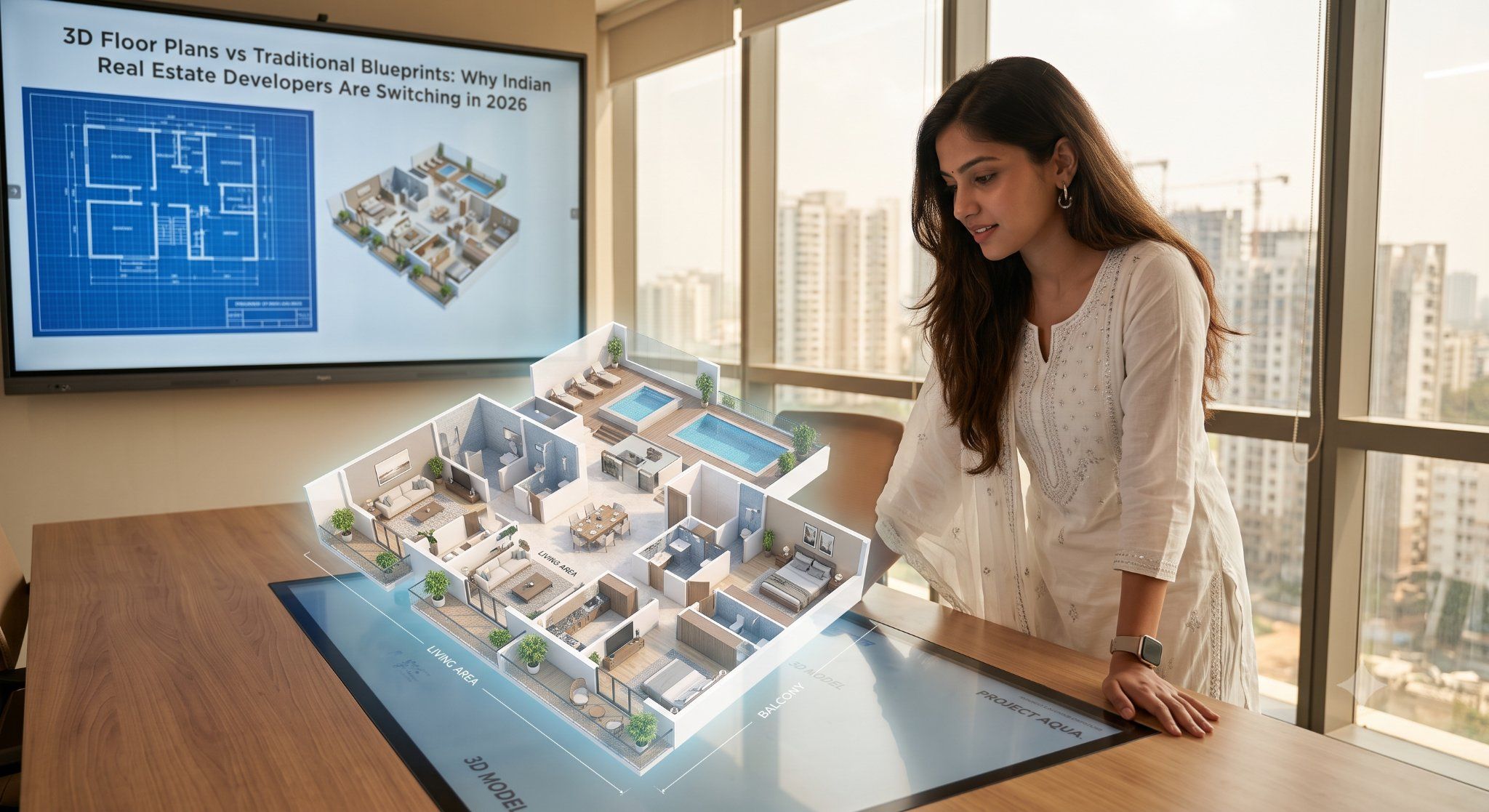
Furthermore, embedding a live interactive floor plan overlay alongside the spatial stream provides critical macro-context. As the user moves through the unbuilt residence, the dual-view UI updates their exact coordinates, viewing vector, and spatial proximity to structural cores in real time. This seamless sync between macro architectural drawings and micro spatial immersion bridges the gap between technical blueprints and emotional ownership.
Tactical Insights: Optimizing the VR Architecture Walkthrough to Sell Off-Plan Real Estate
Understanding how VR walkthroughs help sell off-plan properties requires analyzing buyer psychology through the lens of spatial certainty and emotional connection. When buyers can actively measure spatial relationships—such as evaluating how custom artwork fits against a feature wall or confirming how acoustic privacy buffers an executive study—they transition from passive observers into conceptual owners of the property.
Key strategic performance advantages include:
- Accelerated Global Transaction Cycles: International capital accounts for a decisive share of ultra-prime developments. Data regularly highlighted by Forbes Real Estate confirms that eliminating travel requirements for initial spatial walkthroughs shortens off-plan reservation cycles by weeks.
- Dynamic Real-Time Material Customization: Integrating instant material switchers directly into the spatial stream allows sales teams to address aesthetic preferences instantly during live client calls, securing buy-in without delaying contract execution.
- Lower Sales Gallery Capital Expenditure: Building physical sales pavilions with full-scale interior mockups requires millions in upfront capital that cannot be adjusted post-construction. Virtual sales suites allow endless aesthetic variations at a fraction of physical construction costs.
Analyzing the best VR tools for real estate developers reveals a tiered, complementary technology ecosystem. While high-end real-time engines power high-fidelity cloud-streamed walkthroughs, flexible frameworks like WebXR, Twinmotion Cloud, and Shapespark offer highly accessible alternatives for lightweight, mobile-first browser deployments.
"Spatial computing has transformed architectural visualization from a passive presentation media into an active transactional environment. When an investor can touch, configure, and walk through unbuilt space directly within a web browser, off-plan sales friction fundamentally vanishes."
The Convergence of WebVR Architecture, AR, and Digital Twins
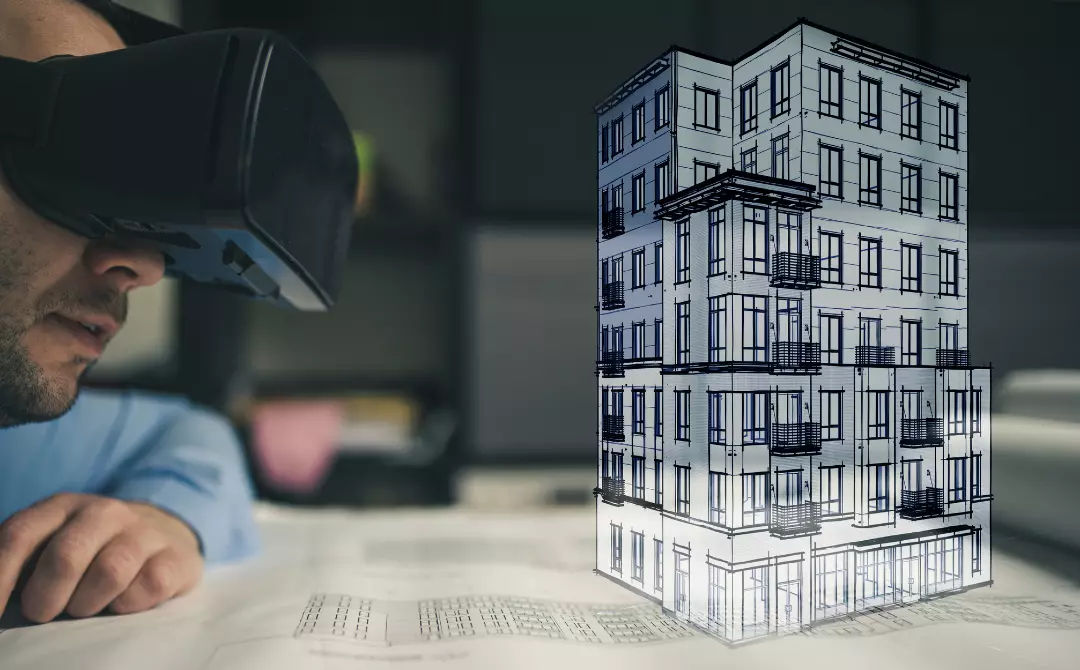
The expansion of modern WebVR architecture extends well beyond high-end virtual reality headsets. The contemporary spatial pipeline links seamlessly into augmented reality architecture platforms. Using spatial computing hardware or mobile tablets, developers standing on raw construction sites can project photorealistic 1:1 scale BIM models over unfinished concrete ground slabs, previewing structural sightlines, solar impact, and contextual skyline framing before facade cladding is even manufactured.
Moreover, the functional lifespan of high-fidelity spatial assets no longer terminates when off-plan sales wrap up. Developers and asset managers increasingly retain these spatial models to form the foundational core of operational digital twins. By linking live IoT sensor networks—monitoring climate control, occupant flow, and structural energy usage—to the original spatial marketing model, real estate entities convert a pre-construction marketing expense into an operational asset managing building performance across its full lifecycle.
Whether providing streamlined 360° VR walkthroughs for fast web viewing or hosting high-fidelity spatial sessions, architectural teams ensure that their digital assets maintain maximum operational utility long past structural completion.
Multi-User Spatial Sales Rooms: Elevating Masterplan Consulting
Consider a large-scale coastal resort masterplan featuring branded luxury villas, where decision-makers and buyers are distributed across multiple global financial hubs. In traditional real estate consulting models, sales presentations relied on physical scale models, static pitch decks, and pre-rendered flythrough videos that offered zero user autonomy.
Through browser-based spatial computing, multi-user state synchronization allows a lead architect, a development partner, and an offshore buyer to meet inside an interactive virtual reality environment simultaneously. The sales director can guide the spatial narrative, triggering precise environmental lighting modes—such as golden hour coastal light or nighttime interior ambient settings—while the prospective purchaser inspects master suite views or secondary outdoor living terraces independently.
This collaborative spatial agency establishes unprecedented buyer trust. Real-time shadow studies confirm actual ocean view corridors, validating premium architectural pricing through verifiable visual accuracy rather than stylized marketing promises.
The Future of Real Estate Marketing Infrastructure
The rapid evolution of low-latency cloud infrastructure, WebGPU browser integration, and real-time neural rendering marks a structural turning point for architectural visualization and real estate development. The historical tradeoff between cinematic visual quality and real-time client accessibility has been eliminated. As global real estate markets become increasingly interconnected, the ability to stream ultra-high-definition, multi-user spatial experiences directly to any device is no longer merely a novelty—it is the baseline infrastructure for modern pre-construction development.

 Architecture & Design