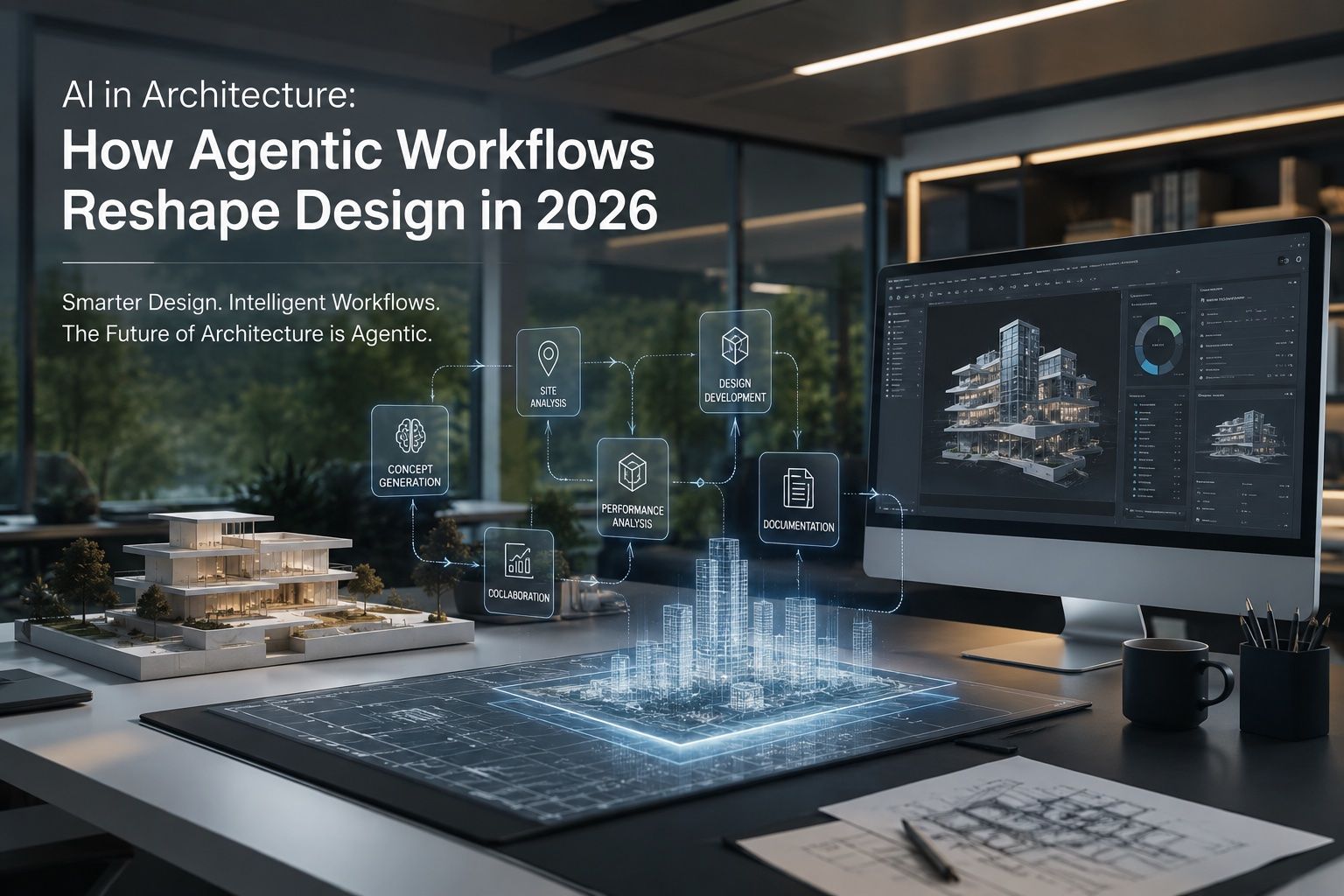
For over two decades, the primary bottleneck in high-end architectural visualization lived within computational execution. An architect or visualizer would craft geometry within a BIM environment, export heavy files into a digital content creation suite, configure delicate light transport parameters, and send jobs to an expensive on-premise GPU render farm or third-party cloud rendering service. Today, modern 3D rendering software architecture has reached a decisive turning point in 2026. The shift from slow, iterative offline path-tracing to native neural rendering pipelines and real-time radiance fields has permanently changed how spatial concepts are synthesized, evaluated, and presented to global stakeholders.
By integrating neural inference networks and 3D Gaussian Splatting directly into design tools, visualizers no longer wait hours to view how sunlight refracts across a custom double-skin facade. Instead, spatial computing models generate high-fidelity lighting and material depth in real time. For studios producing photorealistic architectural renders, this technical leap means design exploration happens instantly at full visual fidelity, collapsing production schedules from multi-week cycles into synchronous design sessions.
3D Rendering Software Architecture: The Rise of Neural Radiance and Gaussian Splatting
The traditional structural framework of rendering software relied on deterministic physics. Algorithms calculated millions of individual ray intersections across complex geometric meshes, evaluating reflections, refractions, and sub-surface scattering through brute-force computation. While physically accurate, this process demanded immense processing power and prolonged production timelines, especially when working with high-poly masterplans or detailed interior lighting setups.
In 2026, neural radiance fields (NeRFs) and 3D Gaussian Splatting have transformed render engine development. Rather than calculating every photon path from scratch, neural rendering engines use lightweight machine learning weights to predict volumetric light behavior and surface details. Gaussian Splatting represents complex spatial environments not as heavy polygon meshes with texture maps, but as millions of continuous, rasterized 3D Gaussians. This approach enables instant rendering of hyper-detailed architectural environments at stable 90+ frames per second on standard desktop hardware.
Major visual software pioneers, including Chaos Group, have adapted to this paradigm shift by embedding neural denoising, instant neural light caching, and real-time volumetric prediction into core engines such as V-Ray rendering and the Corona renderer. Rather than competing directly with real-time engines, classic offline software now operates under a hybrid architecture: leveraging neural layers to accelerate continuous viewport feedback while maintaining physical ray-tracing rigor for final production deliverables.
What Is the Best 3D Rendering Software for Architects in 2026?
The best 3D rendering software for architects in 2026 depends on specific project goals: Unreal Engine 5 leads for interactive spatial computing and live client presentations, while Chaos V-Ray remains the benchmark for high-resolution print marketing. Tools like Enscape and Twinmotion provide seamless BIM-embedded neural workflows for rapid schematic iteration.
To select the optimal software stack for luxury real estate and masterplan development, design teams must evaluate how each engine handles real-time scene translation, lighting accuracy, and hardware scalability:
- Unreal Engine 5 (v5.5+): The uncontested standard for real-time spatial computing, masterplan digital twins, and pre-sales sales suites. With native support for spatial computing hardware, dynamic global illumination through enhanced Lumen, and deep neural upscaling, Unreal Engine bridges the gap between raw interactive performance and photorealistic imagery.
- Chaos V-Ray 7: The industry standard for fine-art architectural marketing stills and cinematic interior films. V-Ray combines advanced path tracing with hardware-accelerated neural light caches, allowing artists to capture complex glass refractions, caustics, and subsurface material properties with uncompromising visual fidelity.
- Enscape & Twinmotion: Optimized for direct BIM integration inside Revit, ArchiCAD, and Rhino. These tools prioritize immediate feedback over granular material sculpting, making them essential for internal design reviews and rapid spatial validation during early project phases.
- NVIDIA Omniverse: Built on the Universal Scene Description (OpenUSD) framework, Omniverse enables multi-user visual collaboration across different software platforms in real time, making it ideal for massive urban planning projects involving global multidisciplinary teams.
V-Ray vs Unreal Engine for Architectural Visualization
When comparing V-Ray vs Unreal Engine for architectural visualization, V-Ray excels in deterministic lighting accuracy and automated camera exposure, making it ideal for high-resolution print stills. Unreal Engine dominates interactive real-time experiences, spatial PropTech sales twins, and instant animations through real-time path tracing and low-latency neural upscaling.
Historically, choosing between V-Ray and Unreal Engine required accepting distinct trade-offs. Visualizers chose V-Ray when maximum material photorealism and zero light-leak artifacts were paramount, accepting longer calculation times per frame. Conversely, teams selected Unreal Engine when interactivity and client walk-throughs were required, accepting minor sacrifices in indirect lighting quality and reflection fidelity.
In 2026, the boundaries between these platforms have blurred significantly due to shared advances in GPU hardware architecture and neural upscaling algorithms:
| Feature / Capability | Chaos V-Ray (v7 Architecture) | Unreal Engine (5.5+ Real-Time Architecture) |
|---|
| Primary Strengths | Uncompromising physical material accuracy, precise light transport, high-res print stills | Real-time walk-throughs, spatial computing twins, interactive material swapping |
| Workflow Integration | Direct plugin host within 3ds Max, Maya, Rhino, Revit | Standalone spatial engine receiving live geometry streams via Datasmith / OpenUSD |
| Computation Method | Hybrid physical path tracing with neural light prediction | Real-time rasterization, hardware path tracing, neural temporal reconstruction |
| Primary Output Format | Ultra-high-resolution static imagery, 8K architectural films | Interactive sales suites, XR spatial digital twins, dynamic animations |
Leading studios no longer treat these tools as mutually exclusive options. Instead, modern production pipelines utilize OpenUSD scene schemas to move assets freely between V-Ray and Unreal Engine architecture, deploying V-Ray for static luxury hero shots and Unreal Engine for pre-construction interactive sales suites.
3D Rendering Software Architecture and the Real-Time Workflow
A modern real-time rendering workflow for architecture maintains dynamic bi-directional synchronization between BIM modeling software and real-time neural render engines. Changes to geometry, structural grids, or material parameters instantly recalculate indirect lighting, reflections, and spatial acoustics without requiring manual export cycles or external render farm submissions.
Transitioning to an integrated real-time pipeline reshapes every stage of the visualization lifecycle:
- Continuous Scene Synchronization: Rather than relying on manual file exports, live-link protocols stream BIM parameters directly into the real-time engine viewport. Wall shifts, curtain wall revisions, and structural updates mirror instantly across all client-facing visual outputs.
- Latent Space Lighting Reconstruction: Real-time neural pipelines analyze sparse ray samples and reconstruct full-res indirect GI, ambient occlusion, and reflection fields in milliseconds, bypassing traditional offline baking phases.
- Procedural Biomimetic Texturing: Material graphs read spatial data to apply realistic wear, localized weathering, and material variation automatically based on real-world sun trajectories, ambient humidity, and geographical exposure.
- Instant Multi-Format Output: From a single live project file, visualizers can simultaneously capture 8K architectural marketing stills, export interactive WebXR links for browser navigation, and broadcast live spatial twins to luxury sales centers worldwide.
By leveraging high-performance architectural CGI rendering workflows, developers eliminate the friction of static image approval cycles. Stakeholders review developments dynamically, evaluating real daylight shifts, interior sightlines, and material variations in real time.
Environmental Integration: Predictively Modeling Decarbonization in Real Time
As municipal net-zero mandates tighten approaching 2030 sustainability benchmarks, graphics engines in 2026 do far more than generate striking visual imagery. Modern render engine architecture connects directly to predictive energy models, life cycle assessment (LCA) databases, and local microclimate simulations during the visual rendering process.
When an artist modifies structural massing or adjusts shading louvers in the viewport, the underlying rendering engine calculates real-time solar heat gain, operational carbon impact, and internal daylight factor metrics. Industry coverage across publication platforms like ArchDaily highlights how leading international practices use integrated visual-environmental engines to justify design decisions to municipal planning boards, ensuring aesthetic vision aligns with performance targets from day one.
Neural rendering does not replace the architect’s eye for proportion or material truth; it eliminates the computational friction between conceptual intent and spatial reality.
Frequently Asked Questions
How is neural rendering changing the workflow for 3D visualization artists in 2026?
Neural rendering eliminates the traditional trade-off between visual fidelity and viewport speed. 3D artists no longer spend hours setting up complex irradiance maps, managing light leaks, or waiting for test renders. Instead, neural networks predict full-quality global illumination and material depth in real time, allowing artists to focus on composition, lighting art direction, and spatial atmosphere.
Which rendering tools offer the best real-time BIM integration for pre-construction sales?
Unreal Engine 5 (via Datasmith and OpenUSD) and Twinmotion offer the most robust real-time BIM integration for high-end luxury property marketing. They allow sales teams to host fully interactive pre-construction walk-throughs where clients can customize materials, adjust interior layout options, and review exact day-to-night lighting shifts inside spatial computing headsets or multi-touch sales suites.
Are cloud rendering and GPU render farms becoming obsolete?
GPU render farms are not obsolete, but their role has fundamentally shifted. Instead of being used for routine draft iterations and standard animation frames, off-premise render farms are now reserved for massive multi-frame temporal path-tracing, hyper-complex volumetric fluids, and generating massive urban-scale digital twins that exceed local hardware memory constraints.
Conclusion: The Era of Instant Spatial Truth
The convergence of native neural rendering pipelines, Gaussian Splatting, and real-time BIM integration represents a permanent evolution in 3D rendering software architecture. By moving away from slow offline calculation loops toward real-time neural synthesis, visualizers and developers gain the ability to explore spatial design decisions with zero computational lag. As spatial computing hardware continues to mature throughout 2026, the real-time visual digital twin becomes the baseline expectation for pre-construction design, marketing, and urban development globally.


 VR & Tech